If cracks appear in walls or gaps form beneath exterior siding, you may have foundation issues. When you see these signs, the next step is to understand what repair options exist and how each addresses a specific problem. At Basement Waterproofing of Michigan, we offer foundation stabilization services and help diagnose where the issue originates. Here are some options for foundation stabilization:
Steel I-Beams for Wall Support
Bowing walls curve inward rather than standing straight, and this affects foundation stabilization. This inward movement is caused by hydrostatic pressure, where water-saturated soil presses against the outside of the wall. Expansive soils and winter seasons can all generate the same kind of lateral pressure. Foundation walls that bow under these conditions also crack, and damaged walls allow water intrusion in addition to structural compromise. Recognizing a bowing wall early matters because the condition tends to worsen over time. If a wall is under continuous pressure without intervention, even minor inward displacement will keep increasing. The earlier you address a bowing wall, the more repair options are available.
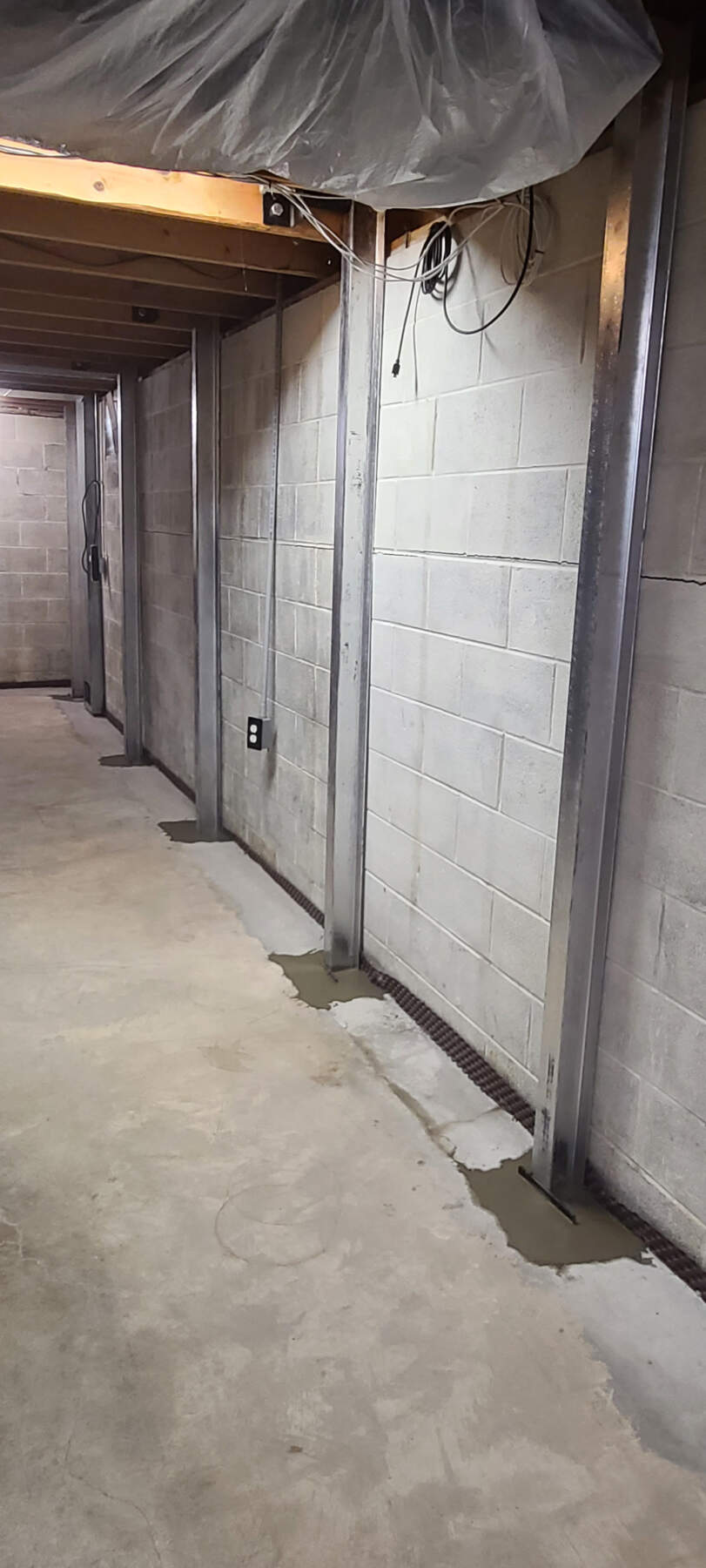
I-Beams help stop bowing and stabilize foundation walls. These solid steel beams are set vertically against the affected wall and the floor joist above. The beam acts as a brace, and it counters the hydrostatic and ground pressure pushing from the outside.
The primary causes that I-Beams address are all external forces that don’t go away. Because the beam is load-bearing and mechanically fixed in place, it provides ongoing resistance to those forces. I-Beams help when the wall has already moved inward to a degree that requires immediate stabilization. They stop further movement, and they can be adjusted over time to incrementally straighten the wall.
Earth Anchors for Stabilization
Basement wall anchors take a different mechanical approach than I-Beams. Rather than bracing the wall from the inside, earth anchors extend through the wall and into stable soil beyond the active pressure zone outside. The anchor plate secures against the interior wall, and the rod tightens against a steel plate embedded in stable soil outside, creating tension that holds the wall in place.
Soil type determines whether anchors are appropriate for your home. Cohesive soils and non-cohesive soils respond differently to anchor systems, and a qualified inspector will assess the soil conditions before recommending this method. One advantage of wall anchors is that the system can be periodically tightened after installation, which allows for gradual wall straightening over time. This makes anchors a useful long-term solution where soil conditions support their use.
Helical Piers for Settlement
While I-Beams and anchors address lateral wall movement, helical piers address vertical settlement. When a foundation sinks or becomes unlevel because the soil beneath it has shifted, the structure loses load-bearing support from below. Professionals install helical piers directly into the soil and rotate them downward to the problem zone. Depth varies depending on soil conditions, but they’re designed to bypass unstable soil and transfer the structural load to ground that won’t compress or shift. Helical piers provide support for both residential homes and commercial buildings. Piers connect to the foundation with a bracket system and help support and lift the foundation back toward its original position.
Repairs for Foundation Stabilization
Cracks in poured concrete often result from normal settlement over time, but they can also cause basement water intrusion. Sometimes hydrostatic pressure forces water through the wall and causes structural stress. Professional crack repair typically uses injection methods with epoxy or polyurethane. Technicians inject these materials under pressure into the crack, filling it from the inside out. This approach works for cracks in poured concrete walls and for I-Beam pockets that have not been previously repaired.
For cracks that have already been repaired and continue to leak, a panel crack repair is another option. This system combines a wall panel with a small drain tile that redirects water pressure away from the crack and into a drainage system rather than allowing it to push through the wall. This method also applies to water entering through chimney cleanout access points.
Choose the Right Repair
Bowing walls, settlement cracks, and water intrusion point to specific underlying causes; each cause requires an appropriate response to address the damage. A professional inspection helps identify the cause and determine which repair method offers long-term support. At Basement Waterproofing of Michigan, our team can help you address basement problems with solutions suited to your property. Contact us today to learn more about our services and benefits.